Why You Don’t Need Collagen Supplements: The Real Science Behind Skin Health

Understanding the Hype: Do Collagen Supplements Work for Skin Ageing?
If wellness trends behave like fashion cycles, collagen supplements are the ubiquitous beige trench coat: omnipresent, highly marketed and often worn with the fervour of a life philosophy. The promise is seductively simple: Drink this powder (the adverts assure us) and your dermis will blossom like alpine meadows in spring. A teaspoon a day keeps the wrinkles away. It is a tidy, aesthetically pleasing story, perfectly suited to a world that prefers narratives to the messiness and complexity of biology. Yet the more the collagen craze accelerates, the more earnestly we should ask the question hiding beneath the froth of social media enthusiasm: do collagen supplements actually work for skin ageing? Or are we witnessing another well-intentioned (well, at least commercially intentioned) but oversimplified attempt to bottle youth? The answer, like most things in aesthetic medicine, is both less dramatic and much more interesting. Probably the most interesting source is a recent study in the American Journal of Medicine which analysed 23 randomised controlled trials. This high level independent study found that when trials were stratified by funding source and methodological quality, there was no consistent beneficial effect of collagen supplements on skin hydration, elasticity or wrinkle improvement in non-industry-funded or high-quality studies, highlighting that the evidence for collagen supplementation in anti-ageing is currently weak or inconclusive.
In this article I will explore what collagen is, what you can do to maintain and preserve it, and which supplements actually have strong evidence in skincare.
The Skin’s Collagen Bank
The skin’s structural integrity depends on collagen, of course; nobody disputes that. It is the scaffolding that gives the face its firmness and its architectural lift. The problem is not that the skin doesn’t need collagen but that oral collagen simply does not behave in the body in the way influencers would have you believe. From your mid-twenties onwards, your dermal collagen does gently but inexorably decline, thinned by UV exposure, micro-inflammation, hormonal change and the steady accumulation of oxidative stress. This age-related collagen loss is real. What is not real is the idea that you can compensate for it by drinking collagen that somehow floats, intact, to your face like a dedicated courier service fulfilling its delivery window. Biology has not enrolled in Prime membership. Everything you ingest is broken down in the gut into its constituent amino acids and peptides long before it reaches the bloodstream. The body does not (and simply cannot) distinguish between the amino acids from a scoop of bovine collagen and those from a plate of grilled fish or a steak. If the goal is simply to provide the body with raw materials, a balanced diet does the job perfectly well without the ceremonial stirring ritual so often presented as essential to glowing skin.
The Science of Skin Ageing: Collagen Breakdown, Not Collagen Deficiency
To understand why collagen supplements often fail to deliver the sweeping transformations they promise, it helps to look at what actually causes skin ageing. The narrative we grew up with (i.e. that we simply ‘run out’ of collagen) is charmingly naive. Skin ageing is not a passive shortage but a complex, dynamic process driven by a tangle of environmental and biological forces. UV radiation remains the principal villain, not only damaging collagen fibres directly but also activating enzymes called matrix metalloproteinases, which accelerate collagen breakdown. Add to this the steady slowing of fibroblast activity (the cells in the skin that actually produce collagen and elastin), the decline in oestrogen that once kept these collagen factories humming as well as the insidious effects of glycation (the process where sugar molecules bind to collagen, stiffening it like over-starched linen, causing inflammation and further breakdown) and you begin to appreciate the real story beneath fine lines and drooping contours.

These processes cannot be meaningfully addressed by sprinkling collagen powder into your morning coffee. Whilst not harmful (apart from to the cows and fish who’ve selflessly given their bodies to be ground up in what is likely an extremely unsustainable way to create these powders), the real problem is the diminished capacity of the dermis to manufacture it robustly and regularly. What the skin needs is not collagen per se but the cellular vitality to synthesise it and the environmental protection to prevent the collagen you already have from being destroyed prematurely. Collagen supplements are simply too downstream in the biological pathway to make a reliable difference. They offer amino acids (important for collagen production) but what the skin craves is cellular instruction, particularly if you eat even a little bit of animal protein each day.
What Happens When You Ingest Collagen? The Truth Behind Collagen Supplement Absorption
One of the most persistent misunderstandings in the collagen conversation is the assumption that orally ingested collagen can somehow retain its identity throughout digestion. In reality, the digestive system is ruthlessly efficient. Collagen molecules (huge, triple-helical structures) are dismantled by stomach acid and enzymes into much smaller fragments. A few small peptides may enter circulation intact, which is often the source of optimistic study results but their role is far more nebulous than supplement marketing suggests. Any improvements seen in trials tend to be modest, short-term and heavily influenced by industry sponsorship.
When compared with interventions that stimulate collagen production directly (retinoids, vitamin C, polynucleotides, lasers) the effect of collagen supplements looks faintly homespun by comparison.
There is also, however, the powerful psychological component. When people invest in collagen supplements, they often concurrently improve hydration, reduce alcohol, regulate sleep or adopt a more consistent skincare routine. These behavioural changes, rather than the supplement itself, will almost certainly produce a change in the skin interpreted as increased glow. Humans are pleasingly susceptible to rituals; when we commit to something, we behave more lovingly toward ourselves. The skin benefits for sure, but more for these general improvements as opposed to the collagen itself.
Another of the lesser-discussed quirks of the collagen-supplement industry is that many powders are generously fortified with vitamins, minerals and phytonutrients that play direct biochemical roles in collagen synthesis. Vitamin C is the most obvious; without it, the enzymes responsible for stabilising the collagen triple helix cannot function, meaning no amount of ingested collagen would ever become structurally useful. Zinc, copper and various B vitamins often appear on the ingredients list too, each involved in cellular repair, protein turnover and antioxidant protection. What this means in practice is that any perceived improvement from a collagen supplement is often attributable not to the collagen itself but to these supporting cofactors, which are genuinely capable of enhancing fibroblast function and lowering oxidative stress. Indeed, as mentioned above, a recent meta-analysis in the American Journal of Medicine showed that in non-industry funded studies, collagen supplements made no difference to the skin. In other words, the glow people attribute to collagen is frequently the glow of a newly corrected micronutrient gap. It is a little like crediting the decorative vase when the real beauty lies in the flowers.
Natural Collagen Production: What the Skin Actually Responds To
If the aim is to support natural collagen production, the interventions that actually work are both more elegant and more scientifically persuasive. Topical retinoids are the undisputed champions; they not only increase collagen synthesis but also inhibit the enzymes that dismantle it. This is exactly why my Good Night formula has always been centred on retinoid science. Stabilised vitamin C, such as that used in Good Morning, participates directly in collagen formation by acting as a cofactor for the enzymes that stabilise the collagen triple helix. Without adequate vitamin C, the body cannot form collagen properly, regardless of how much of the building blocks one consumes.
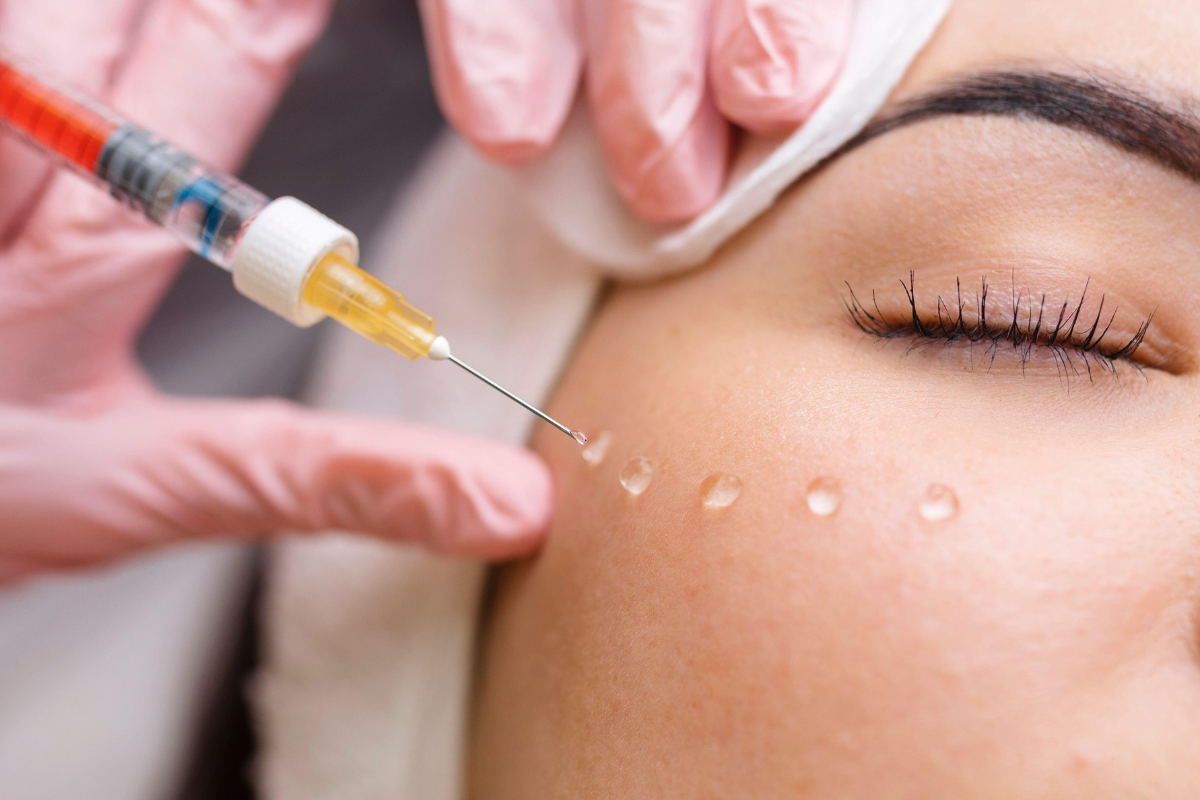
In-clinic treatments take this further by triggering the skin’s regenerative pathways in ways that collagen powders simply cannot. Laser resurfacing techniques, from Er:YAG to UltraClear™, stimulate controlled injury and renewal, coaxing fibroblasts into producing new collagen. Radiofrequency microneedling works similarly by creating micro-thermal zones that prompt tissue contraction and remodelling. Polynucleotides and PRP enhance cell signalling, encouraging collagen synthesis at a molecular level. These modalities are not comparable with supplements; they operate directly within the dermal architecture, speaking the language the skin understands.

Best Supplements for Skin Health: What to Take Instead of Collagen
Despite everything, supplements do have a place in skin health, just not where collagen brands would have you look. Omega-3 fatty acids provide anti-inflammatory support, helping to maintain barrier function and reduce UV-induced inflammation, which indirectly protects collagen from harm. Ceramide supplements have shown measurable improvements in hydration and barrier resilience, meaning the skin is better able to retain moisture and defend against environmental stress. Vitamin D, which many people in the UK are deficient in, influences skin immunity, repair and cellular turnover and can quietly improve overall skin function when restored to adequate levels. Oral antioxidants such as vitamin C, resveratrol and astaxanthin help reduce oxidative stress, one of the key drivers of accelerated ageing.
The amino acid hydroxyproline adds another interesting layer to the story. This amino acid is a signature component of collagen, formed when proline residues undergo post-translational modification within the body. While humans can synthesise hydroxyproline internally, its dietary sources are overwhelmingly animal-derived, since plant proteins contain virtually none. For strict vegetarians who consume very little in the way of animal protein, collagen supplements can therefore act as an external source of hydroxyproline-rich peptides, which may help increase overall availability of the raw materials needed for collagen formation. This is not quite the ethical loophole it appears, since collagen (whether marine or bovine) is undeniably an animal product, but it does explain why some vegetarians feel their skin responds positively after adding collagen to their routine. In reality rather than tapping into a mystical collagen-delivery system, they are replenishing a structural amino acid their diet otherwise lacks.
These supplements support the systems that preserve collagen rather than attempting to replace it. They enhance the skin’s environment. They are not glamourous, and they do not promise miracles, but they make sense. More importantly, they acknowledge what collagen marketing often denies: the skin is not a passive receptacle for ingredients but an active, intelligent organ shaped by its internal and external milieu.
The Verdict: Why You Don’t Need Collagen Supplements for Youthful Skin
The final word on collagen supplements is neither harsh nor dismissive. They are not harmful and if you enjoy taking them, there is no compelling reason to stop. But it is vital to understand what they can and cannot do. They cannot deliver collagen directly to the dermis. They cannot replicate the effects of retinoids, vitamin C or in-clinic regenerative treatments. They cannot outwit UV radiation or override fibroblast ageing. At best, they contribute amino acids to a system already well supplied by a balanced diet. At worst, they divert attention and money from interventions that actually work and are frankly a very processed and unsustainable way to get amino acids that otherwise will be easily found in a good, balanced diet.
Youthful, resilient skin is the result of multiple quiet habits practiced consistently - sun protection every day of the year, a well-formulated skincare routine anchored by retinoids and antioxidants, adequate nutrition, thoughtful supplementation where appropriate and targeted treatments performed with skill and restraint. The body knows how to make collagen; our role is to create the conditions in which it can do so optimally. The beauty of this approach is that it replaces the fantasy of a single transformative ingredient with the reassurance of science (calm, steady, unsentimental) and the knowledge that real skin health is not a powder but a practice.
References
Bölke, L., Schlippe, G., Gerß, J. and Voss, W. (2019) A collagen supplement improves skin hydration, elasticity, roughness, and density: Results of a randomized, placebo-controlled, blind study. Nutrients, 11(10), p.2494. Available at: https://www.mdpi.com/2072-6643/11/10/2494 [Accessed 12 December 2025]
Choi, F.D., Sung, C.T., Juhasz, M.L.W. and Atanaskova Mesinkovska, N. (2019) Oral collagen supplementation: a systematic review of dermatological applications. Journal of Drugs in Dermatology, 18(1), pp.9–16. Available at: https://pubmed.ncbi.nlm.nih.gov/30681787/ [Accessed 12 December 2025]
De Spirt, S., Stahl, W., Tronnier, H., Sies, H., Bejot, M., Maurette, J-M. and Heinrich, U. (2009) ‘Intervention with flaxseed and borage oil supplements modulates skin condition in women’, British Journal of Nutrition, 101(3), pp. 440–445. Available at: https://doi.org/10.1017/S0007114508020321 [Accessed 12 December 2025]
Harvard Health Publishing (2023) ‘Considering collagen drinks and supplements’, Harvard Health Blog, 12 April. Available at: https://www.health.harvard.edu/blog/considering-collagen-drinks-and-supplements-202304122911 [Accessed 12 December 2025]
Kim, H.H., Cho, S., Lee, S., Kim, K.H., Cho, K.H., Eun, H.C. and Chung, J.H. (2006) ‘Photoprotective and anti-skin-aging effects of eicosapentaenoic acid in human skin in vivo’, Journal of Lipid Research, 47(5), pp. 921–930. Available at: https://pubmed.ncbi.nlm.nih.gov/16467281/ [Accessed 12 December 2025]
Kim, H.H., Shin, C.M., Park, C.-H., Kim, K.H., Cho, K.H., Eun, H.C. and Chung, J.H. (2005) ‘Eicosapentaenoic acid inhibits UV-induced MMP-1 expression in human dermal fibroblasts’, Journal of Lipid Research, 46(8), pp. 1712–1720. Available at: https://pubmed.ncbi.nlm.nih.gov/15930517/ [Accessed 12 December 2025]
Leo, T.K. et al. (2022) ‘Effect of Rice (Oryza sativa L.) Ceramides Supplementation on Improving Skin Barrier Function and Facial Skin Parameters’, Nutrients, 14(13), 2737. Available at: https://www.mdpi.com/2072-6643/14/13/2737 [Accessed 12 December 2025]
Myung, S.-K. and Park, Y. (2025) Effects of collagen supplements on skin aging: a systematic review and meta-analysis of randomized controlled trials, The American Journal of Medicine, 138(9), pp. 1264–1277. Available at: https://doi.org/10.1016/j.amjmed.2025.04.034 [Accessed 12 December 2025]
Pullar, J.M., Carr, A.C. and Vissers, M.C.M. (2017) The roles of vitamin C in skin health. Nutrients, 9(8), p.866. Available at: https://doi.org/10.3390/nu9080866 [Accessed 12 December 2025]
Watson, R.E.B., Gibbs, N.K., Griffiths, C.E.M. and Sherratt, M.J. (2014) ‘Damage to skin extracellular matrix induced by UV exposure’, Antioxidants & Redox Signaling, 21(7), pp. 1063–1077. Available at: https://doi.org/10.1089/ars.2013.5653 [Accessed 12 December 2025]