Dermaplaning
Need help?
Book a Virtual Consultation and talk to one of our Skin Experts.
Call us on 0207 589 6309
Key information
What is this treatment for

Additional information
What is Dermaplaning?
Dermaplaning is an increasingly popular technical facial exfoliation technique that rids the skin of it's top layer of dead skin cells and fine vellus hair (‘peach fuzz’). In removing this, there will be reorganisation and optimisation of the skin's natural microbiome and revealing of the fresh new skin to give your skin a brighter, clearer appearance and allow your active skincare products to penetrate more effectively.
How does Dermaplaning work?
Dermaplaning is a manual exfoliation technique that is used to scrape the top layers of skin (stratum corneum) to brighten the skin and allow products to penetrate deeper into the skin. It is performed by our highly experienced master aestheticians using a surgical scalpel blade and is often combined with an exfoliating peel as part of our Egyptian Facial. For those who are not suitable for peels, or who prefer to avoid them, dermaplaning can be an ideal technique as a physical alternative to superficial depth skin peels.
What are the benefits?
Dermaplaning visibly improves the appearance of your skin, resulting in a brighter complexion and it may also help to reduce breakouts by optimising the skin's microbiome whilst also allowing for the effectiveness of any your active skincare products to shine through.
What areas can be treated?
Dermaplaning is suitable for all skin types and tones. It can be performed on the face and other areas on request.
Can it be used with other treatments?
Dermaplaning is an excellent treatment when used as a key step in our Egyptian Facial and in The Bespoke Facial.
What is the downtime?
Skin looks visibly brighter post-treatment. Some redness may be expected as the skin has been stimulated but this tends to settle within an hour.
Where is this treatment available?
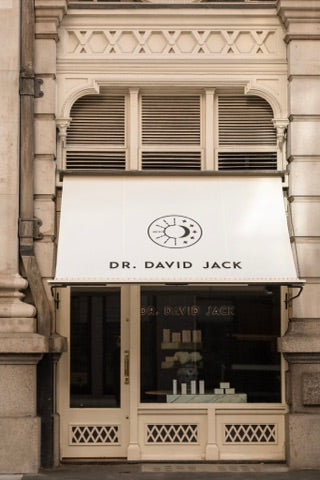
This is offered in London, in our Harley Street, Belgravia, City and Liberty clinics, and our Edinburgh clinic
"Vogue recommends Dr. David Jack's Dermaplaning treatments"

FAQS
Will my hair grow back thicker or darker after dermaplaning?
There is no risk of the hairs growing back thicker or darker as the hair follicles are not affected by the procedure and the hairs being treated are fine vellus hairs, which do not convert to the thicker terminal hair form. In our clinic we use sterile surgical blades rather than razors, which minimises irritation so there is no risk of stubble/folliculitis forming.
Is there any aftercare following dermaplaning?
Aftercare is superbly simple - keep the skin clean and use a little more serum than normal (Particularly vitamin C serums such as our GOOD MORNING serum), as they will penetrate better into the skin than normal. SPF, as always, is essential following a dermaplaning treatment. We always recommend SPF50+ following this treatment on a daily basis (such as our ALL DAY LONG SPF 50 moisturiser)
How does dermaplaning differ to microdermabrasion?
Microdermabrasion is essentially attempting to do a similar thing to dermaplaning, but uses fine diamond or other hard chips to cause abrasions to the surface layer of the skin. This does remove some of the layers of dead cells but at a microscopic level can cause scratches and more irritation than dermaplaning and does not remove the fine hairs. Dermaplaning uses an extremely sharp, laser cut blade to minimise scratching and irritation.
Can the dermaplaning be done during pregnancy or breastfeeding?
Yes - the dermaplaning technique is suitable to be performed during pregnancy.