The New Era of Non-Surgical Face Lifts

There was a time when ‘having your face done’ meant disappearing for a fortnight to Switzerland and returning with a bandage turban and a completely new jawline. These days, most of my Harley Street non surgical facelift patients are in and out in under 30 minutes, back at their desks by the afternoon and nobody is any the wiser. This is, of course, apart from the fact that they look somewhat fresher, better rested and structurally more supported than everyone else in the office.
When people google search for ‘non surgical facelift London’ or ‘facelift alternatives’, what they usually want is a quieter correction of the things that bother them as opposed to a frozen mask or a wholly new face: usually they want to address heaviness around the nose and mouth, a jawline that’s starting to blur, cheeks that seem to have gently migrated south. In clinic, we’re increasingly achieving this with layered, regenerative, non-surgical programmes rather than one big surgical gesture.
The key point (and what differentiates what we do at my clinics in Harley Street, Belgravia, the City of London, Liberty and Edinburgh is that a non surgical face lift is not a single treatment. It’s more of a strategy: a bespoke combination of injectables, collagen-stimulating devices and regenerative treatments that together nudge bone, fat, skin and muscle back towards their more youthful arrangement, while still looking entirely like you.
What Do We Actually Mean By A ‘Non Surgical Facelift’?
Biologically, facial ageing is a structural problem. We progressively lose deep fat and bone, the ligaments of the face slacken, muscles over-recruit in some areas and under-recruit in others and the skin thins and loses collagen and elastin. A non-surgical face lift tries to reverse these changes in a logical, layered way.
Hyaluronic acid fillers restore volume and support key ‘lifting pillars’, particularly in the mid-face, temples and chin. Indeed, a large randomised multi-centre study of 148 patients, for example, showed that mid-face hyaluronic acid filler not only restored mid-face volume but maintained natural-looking improvements at 6–12 months with high patient satisfaction.
Biostimulation treatments such as radiofrequency microneedling and fractional lasers can be combined with fillers stimulate new collagen in the dermis and deeper soft tissues, improving laxity and texture over months rather than days. Multiple clinical and histological studies now confirm that fractional radiofrequency creates genuine neocollagenesis and improvements in wrinkles and skin texture rather than just transient swelling.
On top of that newer injectable regenerative ‘biostimulators’ such as polynucleotides, platelet-rich plasma (PRP) and exosome-based therapies offer a regenerative layer nudging fibroblasts and other skin cells into better behaviour over the longer term. Recent systematic reviews show promising improvements in elasticity, texture and fine lines, albeit with a need for more high-quality trials.
Is this the same as a surgical facelift? No, and expectations need to reflect that. A non surgical facelift ‘London style’ is best for mild to moderate laxity, particularly in the 35–60 age bracket and for people who value subtlety, minimal downtime and the option to iterate over time. Facelift surgery remains the gold standard for severe laxity and heavy tissue descent but for many of my Harley Street patients, a layered non-surgical plan buys them many years before they even need to consider an operating theatre.
How Non-Surgical Face Lifts Work: The Injectable Architecture
Dermal Fillers: Quietly Rebuilding The Scaffolding
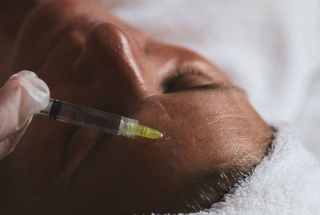
In practice, I usually start with structure. Hyaluronic acid dermal fillers, when placed thoughtfully, deep on the bony surface of the face function like an internal scaffold. They key is to use tiny amounts of product at key points to restore the vectors that keep the face ‘up and out’ rather than ‘down and in’.
A randomised controlled study in the Journal of Cosmetic Dermatology demonstrated that mid-face hyaluronic acid filler produced significant, evaluator-blinded improvements in mid-face volume with natural results sustained at 12 months with over 95% of patients rating the outcome as ‘natural’ at early follow-up.
In clinic, this generally translates into restoring midface support just in front of and over the zygoma (cheekbone), softening deep nasolabial folds via indirect lift rather than simply chasing the line and refining the chin and jawline to replace lost volume from these key points of age related volume change. When done correctly, the lower face should read as more ‘held’ in position. Suitable areas for facial lifting with filler include:
- The cheeks and mid-face
- Temples (for frame and brow position)
- Chin and pre-jowl sulcus
- Jawline angle and mandibular body
- Marionette region and corners of the mouth
When I talk about ‘the art’ of injectables (particularly dermal fillers), I mean the very literal business of understanding how a face is built - bone, fascia, deep fat pads, ligaments, skin; I don’t mean it in the vague, slightly saccharine way the industry tends to. It means working with that architecture rather than simply inflating soft tissue. This is why people come to Harley Street instead of a shopping-centre aesthetic booth: the difference between subtle structural work and overfilled sameness lies entirely in anatomical knowledge and precision, clinical judgement and a certain amount of restraint.
The biggest misconception about fillers is that they are there to fill lines. In reality, fillers are at their most effective when they are used as deep structural supports, restoring vectors and contours that time has allowed to drift. When placed correctly usually on or just above bone, along the natural pillars of the face, they behave like internal struts, quietly buttressing and resuspending the tissues above. This avoids that puffy, outwardly inflated look that results from simply adding volume into the superficial fat (which is increasingly common with imprecise cannula based techniques). Deep placement creates lift by re-establishing the architecture rather than bloating it superficially (above the muscle layer).
This is also why I tend not to inject filler directly into fat compartments when the aim is lifting. Hyaluronic acid is a humectant; it attracts water. Put it into the wrong plane (particularly the mid-face fat pads) has a significant risk of swelling, puffiness or a boggy pearlescent appearance typical of the dreaded ‘filler face’ that tends to gets worse with time. Biostimulating fillers like Poly-L-lactic acid and Calcium Hydroxyapatite can cause their own problems when used superficially: nodules, irregularities, or tell-tale stiffness around the mouth and cheeks. The most natural results come from rebuilding the face from the foundation upwards, not padding it from the outside in.
And then, of course, there’s safety. Most of the horror stories in the filler literature fall into two categories: vascular compromise and aesthetic over-filling. Both are overwhelmingly preventable with the right approach, i.e. meticulous mapping of anatomy, a deep understanding of where vessels run and how they behave, aspiration where relevant and a technique that respects the ‘danger zones’ not to inject. These things matter and are why training, experience and anatomical fluency aren’t optional extras for aesthetic practitioners.
Finally, there’s the simple matter of judgement: knowing when to stop. I have always believed in under-correction as the safest and most aesthetically intelligent philosophy. You can always add more and it’s much harder take away from a face that has been pushed past its natural architecture. A good result should look like the patient is well rested, not like they’ve downloaded someone else’s features. The best work isn’t detectable. It’s the quiet re-suspension of what was already there: people should say ‘You look great’, without quite knowing why.
Polynucleotides, Profhilo and PRP: Regenerating, Not Just Filling
Biostimulators or bioremodellers have become an essential part of how I approach the non surgical facelift at my clinics, not just as add-ons, but as core treatments that improve the quality of skin rather than the quantity of volume. Where fillers restore the underlying framework, regenerative injectables work on the skin draped over that restored deep structure. When the skin itself is thin, crepey or lacking elasticity, structural work alone can only take you so far. This is where treatments like polynucleotides, Profhilo and PRP come into their own, each contributing something slightly different but cumulatively powerful.
Polynucleotides (PDRN, PN-HPT and related DNA fragments) interact directly with the skin’s repair pathways, influencing adenosine A2A receptors to encourage better collagen remodelling, calmer inflammation and more efficient extracellular matrix turnover. Their effects are primarily about improving texture, elasticity and hydration from within rather than volumisation like fillers. The evidence base is expanding steadily: a 2024 review in the International Journal of Molecular Sciences as well as a 2025 systematic review in the Journal of Cosmetic Dermatology both reported consistent improvements in fine lines, tone and elasticity, with minimal and short lived side-effects. In clinic, I use them in zones where the skin gives away age earliest such as the under-eyes, the mid-face skin as well as the jawline and particularly the neck, to restore suppleness without heaviness.

Profhilo sits in the same regenerative category but behaves differently. It contains stabilised hyaluronic acid in a form that spreads widely through the tissue, stimulating collagen and elastin while enhancing hydration and firmness. It doesn’t occupy space like filler and doesn’t alter the face’s shape; instead it gives that subtle firmness and luminosity that makes the whole face look healthier. It works extremely well as a complement to deeper filler placement: the filler provides lift and revolumisation and Profhilo improves the texture and elasticity of the skin stretched over it.
PRP (platelet-rich plasma) adds another more ‘natural’ dimension. The original regenerative injectable (having been around for decades in aesthetics), it uses a patient’s own growth factors to stimulate repair, improve texture and brighten the skin. Evidence from controlled split-face studies shows improvements in fine lines, periorbital ageing and overall dermal vitality, as well as being beneficial in hair growth and restoration. In practice, I tend to use PRP when there is early crepiness, dullness or loss of elasticity that needs a biological nudge, or for patients who are keen on using natural endogenous methods of rejuvenation.
What links these treatments is the principle that great aesthetic outcomes rely on good skin health. A the way to create a good non surgical facelift outcome is rarely about adding volume everywhere. The structural rebuilding is important but the skin itself should look strong, hydrated and resilient. If the skin is thin or lax, even beautifully placed filler will only partially correct the signs of ageing. Biostimulators change the quality of the canvas, so the structural work beneath appears more refined and convincing.
I combine polynucleotides, Profhilo and PRP selectively, depending on what the skin needs. Some patients benefit from alternating cycles; others require targeted treatment of specific zones, such as the neck or peri-orbital area. The aim is always to enhance elasticity, hydration and dermal integrity while keeping the face natural in contour and expression.
Anti-Wrinkle Injections: Strategic Muscle Editing
Facial neurotoxin injections are often misunderstood as simple ‘wrinkle smoothers’ - this is understandable as that is how they’ve been classically marketed, but in the context of a non surgical facelift they function far more like precision ‘muscle editors’, meaning they are used to recalibrate the balance of muscular forces that either support or drag down the face. Botulinum toxin itself does not lift tissue in the way filler or energy-based devices can as it is does not add volume; instead, it reduces excessive downward pull. When the depressor muscles of the face are overactive, as what tends to happen with age, they behave like small anchors tugging the face towards the midline or the neckline. By quietening the tension in muscles, you allow rebalancing of the tension allowing the natural elevator muscles to work against less resistance, creating a measurable (and importantly, natural looking) degree of lift.
The classic example is the interplay between the glabella, frontalis (forehead muscle) and the lateral brow. The corrugator muscles and procerus fibres form a central complex in the frown area that continually pulls the brows medially (towards the middle of the face) and inferiorly (i.e. downwards). When these fibres are softened with carefully calibrated doses of toxin, the lateral fibres of the frontalis can act more freely, giving the tail of the brow a gentle elevation. This should not be a ‘frozen’ effect but rather a restoration of light and openness in the upper face.
High-quality clinical reviews consistently show that neuromodulators, when injected with anatomical precision produce reliable reductions in dynamic lines, with dose-dependent predictability and a serious adverse-event profile that remains extremely low in experienced medical hands.
The same principle applies to the lower face. The depressor anguli oris muscle (otherwise known as the ‘DAO’), responsible for dragging down the corners of the mouth, contributes significantly to a fatigued, frowning expression. Weakening this muscle can soften the downward curvature, subtly restoring a more neutral or gently upturned corner of mouth (or ‘oral commissure’). In combination with structural support from a little dermal filler in the marionette region or ‘pre-jowl sulcus’, it creates a smoother, more harmonious lower-face contour without altering facial identity.
Along the jawline, the platysma, a broad, superficial muscle, plays a particularly important role in dragging the face downwards. Its vertical fibres can act as competing vectors against the lifting effect of deeper tissues. When these fibres are overactive (again, with time and gravity), they accentuate jowling and can disrupt jawline definition. Strategically placed micro-doses of toxin into the platysmal bands reduce this downward traction, helping the deep ligamentous support to appear more defined and allowing subtle jawline contour to re-emerge. This is one of the most undervalued aspects of non surgical lower face lift treatments: a well-executed ‘Nefertiti lift’ helps to restorie balance to an area that is extraordinarily sensitive to gravitational descent.
Then there is the masseter, a muscle that is increasingly relevant in the aesthetic landscape due to stress-related ‘bruxism’ (or tooth grinding), high-intensity and weight training, and general patterns of modern living. When overactive or hypertrophic, the masseter can give the lower third a square, heavy appearance that disrupts the natural taper of the face, particularly in the female face. Reducing its bulk with toxin can refine the jawline, enhance the result of cheek or chin filler, and improve facial proportionality. This isn’t exclusively cosmetic: many patients also report reductions in tension headaches and nocturnal clenching, making it both a functional and aesthetic intervention. Care needs to be taken not to relax the muscle so much that atrophy is caused - resulting in excessive volume change and jowling in itself. It is extremely important to see a practitioner well experienced in treating this complex area as a result.
What toxin cannot do is physically lift descended tissues, correct volume loss or compensate for ligament laxity. It cannot restore mid-face projection, replace fat pads,or recreate the contour of a jawline that has structurally softened with age. Instead, it performs a more nuanced role, optimising the muscular environment so that the structural elements of a non surgical facelift (fillers, biostimulators, RF microneedling, lasers) can achieve their full potential. In that sense, toxin is not the star of the show but an essential supporting character, creating the right conditions for lift to appear natural, cohesive and stable over time.
Skin Tightening Technologies: Devices That Genuinely Lift
Skin-tightening technologies have become central to the modern non surgical facelift because they address a dimension of ageing that injectables alone cannot: the gradual weakening of the dermal support structures. As collagen and elastin degrade, the overlying soft tissues lose their internal tension, contributing to laxity, texture changes and early descent. This is even the case in faces with good underlying volume. Energy-based devices restore strength where the ageing process has thinned it, creating firmer, more cohesive tissue in a way that reads as lift.
Among these technologies, radiofrequency microneedling including devices such as Morpheus8 and its close relatives, plays a distinctive role. The technique uses insulated needles to deliver controlled radiofrequency energy at pre-set depths within the dermis and sub-dermis. The needles create micro-channels that trigger a wound-healing cascade, while the heat generated by the RF energy denatures collagen in a controlled fashion, prompting the formation of new, better-organised collagen and elastin fibres. Clinical studies and histological examinations consistently show increased dermal thickness, improved collagen cross-linking and visible changes in laxity and fine wrinkling, particularly in structurally thin areas. One large minimally invasive study combining adjustable-depth fractional RF with bipolar RF demonstrated significant improvements in lower-face and neck laxity with high patient satisfaction and short recovery times (an important combination in any non surgical face lift protocol).

What makes RF microneedling so useful in a non surgical lower face lift is its ability to strengthen tissue along the very vectors where descent becomes visible. Early jowling, for example, is often a problem of ligament relaxation and dermal thinning rather than volume loss alone. RF microneedling reinforces these weakened zones, creating firmer, more elastic tissue around the jawline and under the chin. The same applies to crepey lower-face and neck skin, where volume-based solutions are often ineffective or inappropriate. By improving the density and organisation of collagen, RF microneedling gives these areas a smoother, tighter appearance.
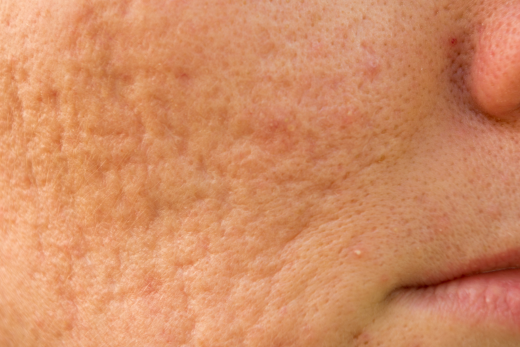
The treatment also appeals to patients who want textural refinement alongside tightening. Because the microneedling component influences superficial texture resurfacing while the radiofrequency stimulates deeper remodelling, the result is a multi-layered improvement: finer skin on the surface, stronger scaffolding beneath. This dual action is particularly valuable in patients with photodamage, acne scarring or generalised laxity, where addressing a single layer of the skin would not create a convincing overall result.
Recovery is fairly straightforward: typically a day or so of redness and mild swelling, occasionally accompanied by a sandpaper-like texture for a few days as the epidermis renews. The deeper results unfold gradually over three to six months as collagen remodelling progresses meaning that improvements appear natural and progressive rather than abrupt. When integrated into a broader non surgical facelift plan, RF microneedling helps create cleaner jawlines, firmer lower-face contours and a more robust dermal foundation for the lift achieved by fillers and biostimulators.
Fractional Lasers And UltraClear
Fractional laser technology has become a core element of non surgical facelift work because it improves the skin’s structural integrity without the recovery associated with traditional, fully ablative CO₂ resurfacing. Both ablative and non-ablative fractional lasers create microscopic treatment columns surrounded by intact tissue, allowing controlled thermal injury while preserving relatively rapid healing. A 2024 review of modern laser platforms confirmed that fractional and hybrid systems produce measurable improvements in wrinkles, textural irregularity and pigmentation with significantly less downtime than older resurfacing techniques.
UltraClear, our newest addition in our in-clinic offering in both London and Edinburgh belongs to this newer generation of fractional lasers and is defined by its precision. Pulse depth, density and energy can be adjusted with accuracy, enabling treatment that targets very specific anatomical layers. In a non surgical facelift context, I use UltraClear as a means of increasing dermal density and improving the firmness of the jawline, lower cheek and neck which, in turn helps to lift the skin. When the dermis is thicker and better organised, the overlying soft tissues sit more cleanly, giving the impression of improved contour and support.
The laser’s benefits extend to surface quality: fine lines, pigmentation and superficial scarring all respond predictably because UltraClear drives uniform epidermal renewal and controlled dermal remodelling. This makes it particularly effective in patients whose ageing is a combination of deeper ligamentous laxity and more superficial photodamage.
UltraClear integrates well with injectable and radiofrequency-based approaches. When structural filler provides support, RF microneedling strengthens deeper dermal layers and fractional laser improves the upper dermis and epidermis, the accumulated effect is a clearer, firmer and more even complexion. Nothing is exaggerated; the improvements emerge through better tissue quality rather than added volume.
Fractional lasers therefore occupy a distinct place in the non surgical facelift pathway: they restore dermal structure, clarify the surface and enhance the way the face reflects light, all while maintaining a short and predictable recovery period.
Endolift: The Semi-Invasive Non-Surgical Jawline definer
For those with fullness under the chin, Endolift is a new and exciting option to tighten the skin and reduce fat under the jawline. Endolift sits slightly apart from external energy-based devices because the laser is delivered subdermally (i.e. under the skin) rather than through the skin’s surface. A fine optical fibre is inserted along predetermined anatomical vectors, allowing controlled thermal contraction of fibroseptal bands and selective reduction of small fat compartments. This internal approach produces a degree of tightening that is difficult to achieve with surface-based modalities such as RF microneedling or fractional laser alone.
In my practice in London, Endolift is reserved for cases where the ageing pattern is progressing beyond what injectables and non-invasive tightening alone can correct i.e. more pronounced submental fullness and early volume-laxity mismatch that doesn’t yet justify surgery, or for patients who just don’t want surgery for this area. When combined with structural filler and surface-level tightening techniques such as fractional laser or radiofrequency microneedling, it can enhance definition and provide a more multidimensional lift, particularly in the jawline and neck. I personally don’t advocate using Endolift on the face (I only use it on the neck and body due to the relatively high risk of nerve damage and facial fat reduction.
Non-Surgical Facelift Treatment Planning by Area:
Upper Face
The upper third of the face is all about light, lift and expression. Here, anti-wrinkle injections have a particularly sophisticated role: softening the overactivity of the glabella and central brow so the lateral forehead can lift naturally. For patients with early brow descent, a carefully judged brow toxin pattern can create an elegant, subtle elevation without stiffness. Temple and lateral cheek filler (placed deeply on bone) restore the side profile and support the tail of the brow. RF microneedling or UltraClear improve texture around the eyelids, while polynucleotides or PRP help strengthen thin peri-orbital skin. ogether, these treatments restore openness and clarity without altering the character of the eyes.
Mid Face
This is often where the earliest signs of structural ageing appear and where a non surgical facelift does some of its most transformative work. Deep cheek filler placed on the zygoma (cheekbone) and deep medial fat pads restores projection and indirectly lifts the nasolabial region, softening folds without much need for ‘filling the line’. Polynucleotides and Profhilo enhance elasticity and refine thinning mid-face skin, preventing that subtle crepiness that can undermine deeper structural treatments. UltraClear or RF microneedling can tighten laxity in the lower cheek, improving texture and strengthening the tissue between the malar area and the jawline. The result is a gentle re-suspension of the mid face that looks harmonious rather than inflated.
Lower Face
Jowling, heaviness around the mouth and early loss of jawline definition are some of the most common concerns in the lower third of the face. Here, chin and jawline filler placed supraperiosteally on the bone and along the mandibular (jawbone) border restores the angles and support that gravity gradually erodes. Toxin in the muscle that tugs down on the corners of the mouth (depressor anguli oris, ‘DAO’) used judiciously, can soften the downward pull at the corners of the mouth. Again, RF microneedling or fractional laser strengthens the dermal scaffolding along the jawline and under the chin while Polynucleotides or Profhilo can enhance elasticity in this area, preventing that fine, crêpe-like laxity in the areas around the mouth that filler alone cannot correct.
Neck
The neck often ages faster than the face and is one of the most revealing areas in profile. Platysmal band toxin reduces vertical pull that disrupts the jawline contour. Toxins in these bands can help to lift the neck and lower jawline while RF microneedling delivers some of its most impressive tightening results in the submental region and upper neck, improving laxity without adding volume. Profhilo or polynucleotides improve elasticity and hydration, which is essential in thinner, sun-exposed skin. Endolift can refine submental heaviness and tighten deeper fibroseptal layers in appropriate patients. Used together, these treatments create a smoother, firmer contour that blends seamlessly into a refreshed lower face.notices something has been done.

Why Choose Dr David Jack Clinics for a Non-Surgical Facelift in London or Edinburgh?
Non surgical facelift treatments are offered widely in London and Edinburgh, but our approach is built on a different foundation: anatomical precision, layered planning and a genuine emphasis on regenerative outcomes. Every treatment plan is designed individually after a detailed assessment of bone structure, soft-tissue descent, ligament integrity and skin quality rather than following preset ‘packages’ or treating isolated areas. Our clinicians work with evidence-based techniques and peer-reviewed modalities, ensuring each intervention has both scientific rationale and a clear aesthetic purpose.
We also prioritise naturalism. The goal is not to erase the lines that make you expressive, nor to inflate the face for instant impact. Instead, we restore proportion, balance and structural support while improving the quality of the skin so that the overall result looks coherent and believable. Long-term skin health underpins everything we do: medical-grade skincare, sun protection and barrier repair are part of the plan, because they protect the investment you make in clinic and preserve your results for years rather than months.
If you are considering a non surgical facelift in London or Edinburgh, whether you are starting early or addressing longstanding concerns, a consultation is the best place to begin. We will make sure we understand your goals and priorities, discuss timing and downtime and design a measured, staged plan that respects your face and delivers results that are refined, durable and true to you.
References
Haykal, D., Cartier, H., Goldberg, D. & Gold, M. (2024). ‘Advancements in laser technologies for skin rejuvenation: A comprehensive review of efficacy and safety’, Journal of Cosmetic Dermatology, 23(10), pp. 3078–3089. Available at: https://pubmed.ncbi.nlm.nih.gov/39158413/ [Accessed 21 November 2025]
Wang, X., Wu, Y., Li, B., Mu, X. & Li, L. (2022). ‘Lifting the midface using a hyaluronic acid filler with lidocaine: A randomized multi-center study in a Chinese population’, Journal of Cosmetic Dermatology, 21(12), pp. 6710–6716. Available at: https://pubmed.ncbi.nlm.nih.gov/35925834/[Accessed 21 November 2025]
Kauvar, A.N.B. & Gershonowitz, A. (2022). ‘Clinical and histologic evaluation of a fractional radiofrequency treatment of wrinkles and skin texture with novel 1-mm long ultra-thin electrode pins’, Lasers in Surgery and Medicine, 54(1), pp. 54–61. Available at: https://doi.org/10.1002/lsm.23452 [Accessed 21 November 2025]
Dayan, E., Chia, C., Burns, A.J. & Theodorou, S. (2019). ‘Adjustable depth fractional radiofrequency combined with bipolar radiofrequency: A minimally invasive combination treatment for skin laxity’, Aesthetic Surgery Journal, 39(Suppl 3), pp. S112–S119. Available at: https://doi.org/10.1093/asj/sjz055 [Accessed 21 November 2025]
Lee, K.W.A., Chan, K.W.L., Lee, A., Lee, C.H., Wan, J., Wong, S. & Yi, K.-H. (2024). ‘Polynucleotides in aesthetic medicine: A review of current practices and perceived effectiveness’, International Journal of Molecular Sciences, 25(15), 8224. Available at: https://pubmed.ncbi.nlm.nih.gov/39125793/[Accessed 21 November 2025]
Lampridou, S., Bassett, S., Cavallini, M. & Christopoulos, G. (2025). ‘The effectiveness of polynucleotides in esthetic medicine: A systematic review’, Journal of Cosmetic Dermatology, 24(2), e16721. Available at: https://pubmed.ncbi.nlm.nih.gov/39645667/ Accessed 21 November 2025]
Tsai, Y-W., Cheng, C-Y., Hu, S., Chang, S-L., Lin, T-M. & Huang, Y-L. (2024). ‘Platelet-rich plasma versus platelet-poor plasma for treating facial photoaging: A double-blind randomized controlled splitting face study’, Aesthetic Plastic Surgery, 48(11), pp. 2162–2170. Available at: https://pubmed.ncbi.nlm.nih.gov/38253883/ [Accessed 21 November 2025]
Bai, G., Truong, T.M., Pathak, G.N., Benoit, L. & Rao, B. (2024). ‘Clinical applications of exosomes in cosmetic dermatology’, Skin Health and Disease, 4(6), e348. Available at: https://pubmed.ncbi.nlm.nih.gov/39624733/ [Accessed 21 November 2025]
Nilforoushzadeh, M.A., Heidari, A., Ghane, Y., Heidari, N., Azizi, H., Fakhim, T. et al. (2024). ‘The Endo-lift Laser (Intralesional 1470 nm Diode Laser) for dermatological aesthetic conditions: A systematic review’, Aesthetic Plastic Surgery, 48, pp. 5097–5114. Available at: https://pubmed.ncbi.nlm.nih.gov/38886198/ [Accessed 21 November 2025]